Wild, remote, peaceful: my trip to Lundy Island
Updated: Dec 12, 2025
(Featured on National World and Sixtyplusurfers)
Why visit Lundy Island? Because it’s remote, rugged, and full of natural charm.

I’d always wanted to go, and my visit this September didn’t disappoint. Soaring cliffs, unperturbed wildlife, and a sense of stepping back in time were just some of its many highlights. That and enforced escape from my phone thanks to a near-total lack of Wi-Fi.
Reaching the three-mile-long rocky outcrop was an adventure in itself. First launched in 1958, the MS Oldenburg has been ferrying passengers from Ilfracombe since 1986 — a two-hour journey offering sweeping views of the North Devon coastline. Go prepared, though: if you’re prone to seasickness, take a tablet or two and enjoy the air on deck.
Seals greeted us as we docked at the island’s wooden jetty. Some were basking on rocks, others sunned themselves in pebbled inlets, while a curious few bobbed up to peer at the latest incomers. As a designated Marine Conservation Zone, a normal sight for islanders and a real treat for the rest of us.

The National Trust was gifted Lundy in 1969, and since then its landscape, buildings, and wildlife have been managed by the Landmark Trust. Around 30 people share duties that range from farming the island to running the pub and shop. As I heard one long-term resident telling a visitor: “My wife and I have lived here for ten and a half years and there’s always something to do. You’re never not on call.” He wasn’t complaining, far from it. Community and self-sufficiency are essential when you’re twelve miles offshore, reliant on generators for power, supply boats for provisions, and enough rain to replenish ponds and streams.
Forget televisions, radios, and even 24-hour electricity (the supply is switched off between midnight and 6am). Lundy is about simplicity and reconnecting with nature. It’s home to the UK’s smallest mammal, the pygmy shrew, as well as Sika deer, Soay sheep, goats, ponies, Highland and recently introduced Dexter cattle. Offshore, basking sharks, dolphins, porpoises, seals, and whales patrol the waters, while some 140 bird species visit annually.
Lundy, from the old Norse for puffin, is also a seabird haven. Thousands of puffins breed here each spring, alongside Manx shearwaters, guillemots, razorbills, and kittiwakes. Birdwatchers are drawn in their droves — I spotted several long-lensed cameras among my fellow passengers.
A free guided walk led us from the sea up to the island’s southern quarter. Other than a few farm vehicles and a Land Rover for luggage, there are no cars, and the climb is steep in places. I took it at my own pace and enjoyed some stunning views.

Human history on this British outpost is just as compelling as the wildlife. Inhabited for at least 3,000 years, it boasts 41 scheduled monuments - from Bronze and Iron Age remains to early Christian grave markers, a medieval castle, and a Victorian church. Echoes of the past are everywhere, and I could easily imagine Vikings marauding, Civil War Royalists fortifying their stronghold, or pirates counting out booty.
In 1834, businessman William Hudson Heaven bought Lundy and built Millcombe House, an impressive Georgian villa. Now let out to guests, the property’s white walls, large sash windows and sheltered valley setting are an unmissable – and surprisingly elegant - feature in an otherwise wild, often windswept landscape. A ‘Heavenly’ statement indeed.
Accommodation is part of Lundy’s charm. Twenty-four different options include a castle keep, a former school, a lighthouse and even a church vestry. Tibbetts, a remote former signal station two miles from the village, is perhaps the most extraordinary. With no electricity and built-in bunk beds, it offers a true back-to-basics hideaway that, judging by reviews, solitude-seekers love.
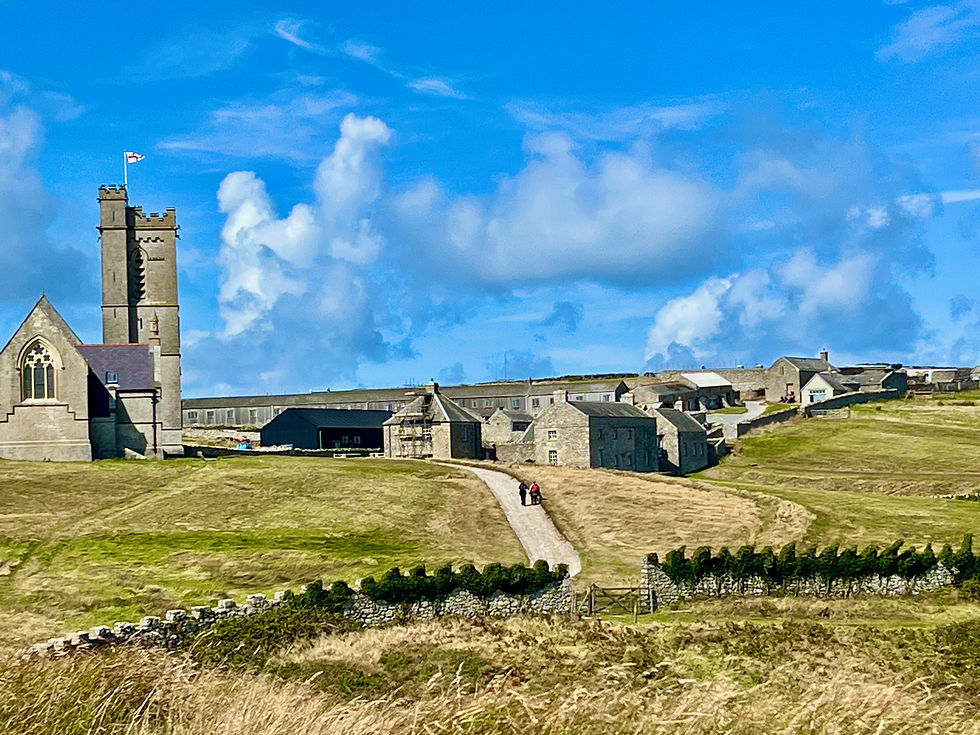
As a place to acknowledge the past whilst embracing a slower present, Lundy made me stop, take stock and breathe.
Close, yet worlds away too.
Refuge, adventure, wildlife. All that - plus much-needed pause.
For more information, visit: the website