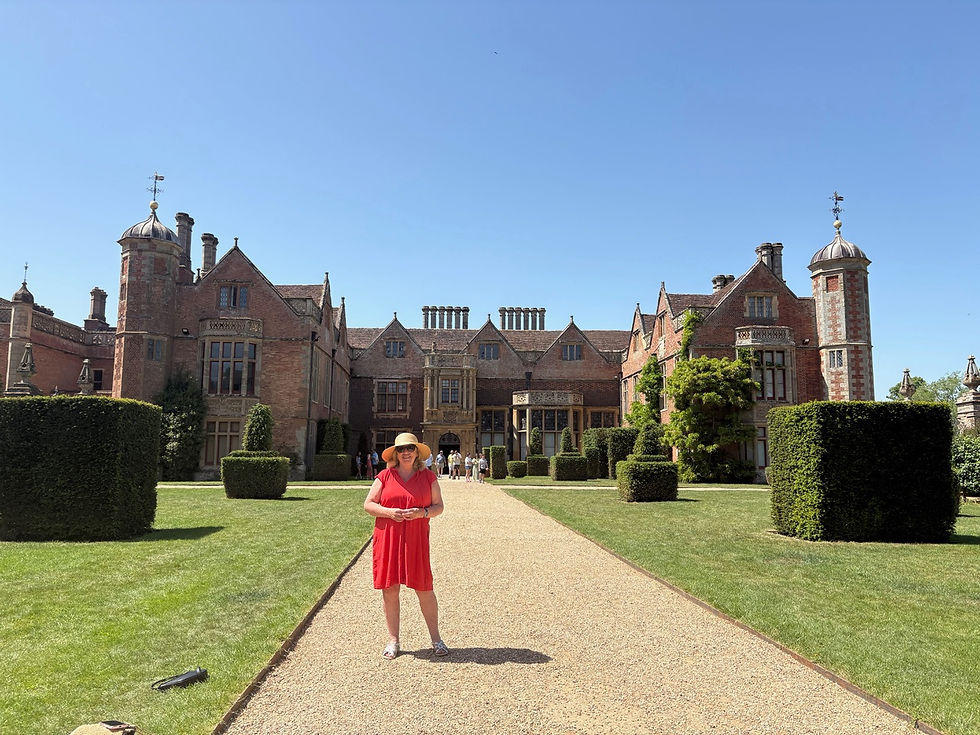
A cruise like no other
Updated: Dec 12, 2025
(Featured on National World and Sixtyplusurfers)
“This ship has character.”

That’s how one of my fellow passengers onboard Star Clipper summed up our week-long adventure and I couldn’t agree more.
It explains why so many people watched our port arrivals and departures from the shoreline and why a Star Clipper cruise feels very different to the many others on offer.
With four masts, sixteen sails, polished brass, mahogany rails and teak decks, our ship oozed all the grandeur of a bygone age – whilst also providing modern comfort, delicious food, two swimming pools and a level of friendly, nothing-is-too-much trouble service that is honestly second to none.
There are three ships in the Star Clipper fleet and I’ve been on them all. On this occasion, though, I had to think hard before booking my passage from Greece to Turkey and back. Not because I didn’t desperately want to go – I loved each of the four previous trips I’d done – but because I was nervous of my physical capability.
Why? Because in December 2020, I was the victim of a hit and run. My injuries were serious, and it’s taken me a long time to recover. Would I still be able to manage steps to and from a tender and the occasional rolling sea?
The answer is yes! In fact, I feel rejuvenated after making new friends, discovering new places and immersing myself in a seaborne, multi-national community that wants to experience life on the ocean wave in a genuine, feelgood way.
At full capacity, Star Clipper has 166 guests and 74 crew. People get to know one another in communal surroundings that include an Edwardian-style library, a piano bar, Tropical Bar and an elegantly appointed dining room. Antique prints and paintings adorn the walls and each cabin on the four main decks has an ensuite shower or bathtub.

The ship might be significantly smaller than many cruise liners but there’s no shortage of space. What’s more you can go on the bridge, help haul the sails, climb the mast and venture on to the bowsprit netting. A packed schedule of daily events also ensures there’s plenty to learn, see and do – whilst lazy sunbathing and magnificent stargazing are always a day or night option.

Our voyage took us from Piraeus, near Athens, to Kusadasi in Turkey and back via the Greek islands of Patmos, Amorgos, Mykonos and Spetses. We were under sail for most of the time and, thanks to our size, could anchor in idyllic spots that much bigger liners couldn’t even contemplate.

My first excursion after an initial day at sea was to the House of the Virgin Mary in Turkey and the nearby ancient city of Ephesus. According to legend, Mary spent her last days in the small stone building that’s up a mountain and surrounded by woodland, with visitors asked to stay silent as they walk through its two simple rooms. Outside, cicadas provide a loud natural backdrop of sound whilst pilgrims drink mouthfuls of spring water and post their supplications. Whether or not you believe, the site exudes a mystical beauty I found compelling.
Ephesus itself is a must-see tourist attraction that demands a significant amount of downhill walking and, in the summer heat, plenty of sun protection. Once a thriving Mediterranean trading port housing a quarter of a million people, the ruins so far excavated (just ten per cent of the total area) provide a fascinating insight into Roman life, culture and art. Standout features are the Temple of Artemis (one of the seven wonders of the ancient world), the Library of Celsus and The Great Theatre – capable of holding 25,000 spectators.

I was particularly interested to learn that the city’s commercial marketplace – known as an agora in Greek – was so large and busy that it became a magnet for criminals. That’s where our word ‘agoraphobic’ comes from, the fear of going into a bustling open space.
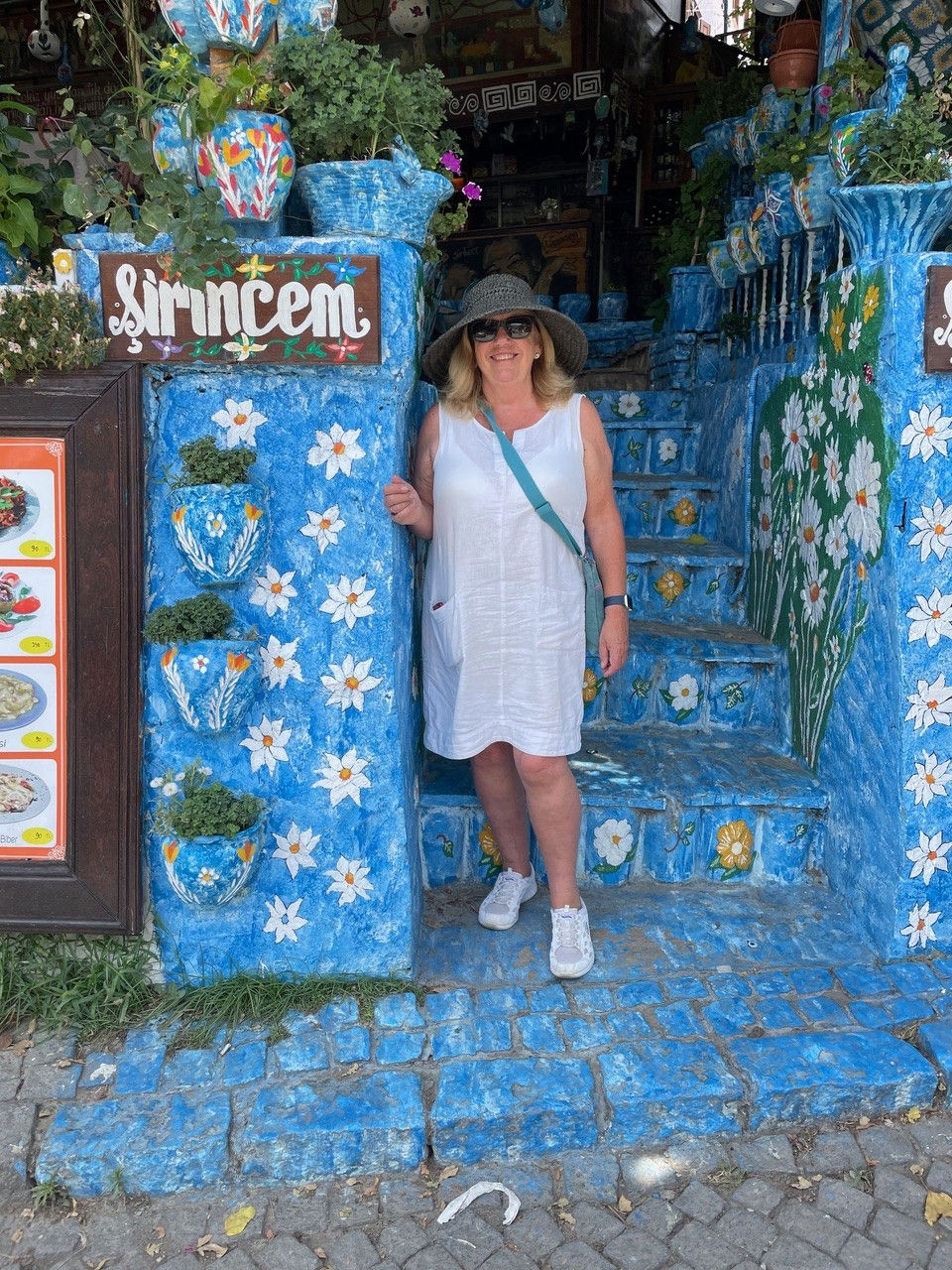
Before travelling back to Kusadasi where a tour of a traditional Turkish carpet maker awaited (despite the hard sell, I resisted buying a rug), our guide took us to a quaint mountain village famous for its wine, olive oil and local produce. Founded in the fifteenth century by slaves fleeing Ephesus, the settlement was originally named Cirkince, meaning ‘ugly’, to deter curious outsiders. Now called Sirince, a Turkish word for ‘charming’, the cobbled streets, white stone houses and colourful array of businesses are well worth a wander.
Departing Turkey, our next port of call was Patmos where I visited St John’s Cave (according to Christian belief, he wrote the Book of the Apocalypse there) and the 11th century monastery dedicated to his memory. The treasures the latter contains include several skulls, ancient manuscripts, religious relics and an impressive library. Monks still go about their prayerful lives there – the latest addition to their number being the island’s plumber!
Days spent anchored off the Greek islands of Amorgos (stunning setting for the 1988 film The Big Blue), Mykonos (beautiful bolthole for the rich and fashion conscious), and Spetses (quietly picture-perfect) all boasted extraordinary highlights. I particularly enjoyed seeing the ruins of Delos (a half hour ferry ride from Mykonos). Mythologically regarded as the birthplace of Apollo and once a prosperous city, the rocky island was eventually abandoned after vicious attacks by enemies of Rome that saw thousands of residents massacred. Still uninhabited, the haunting remnants of lives once lived there are a mecca for archaeologists and, like me, the historically curious.

Guests gather on the upper deck at every Star Clipper port departure to watch her sails rise against the rousing musical strains of ‘Conquest of Paradise’ by Vangelis. A magnificent sight and moment to treasure as the ship catches the wind and another sunset beckons.

The Star Clipper certainly has character.
It also has soul.
Fact File
Sue travelled on the Star Clipper Northern Cyclades route. Cruise-only price based on 2 adults sharing a lead-in category 6 cabin is £1893pp. Price includes 10% Early Booking Discount valid until 31st January 2026.
Reservations: 01473 242666