Looking for Shakespeare. Finding Will
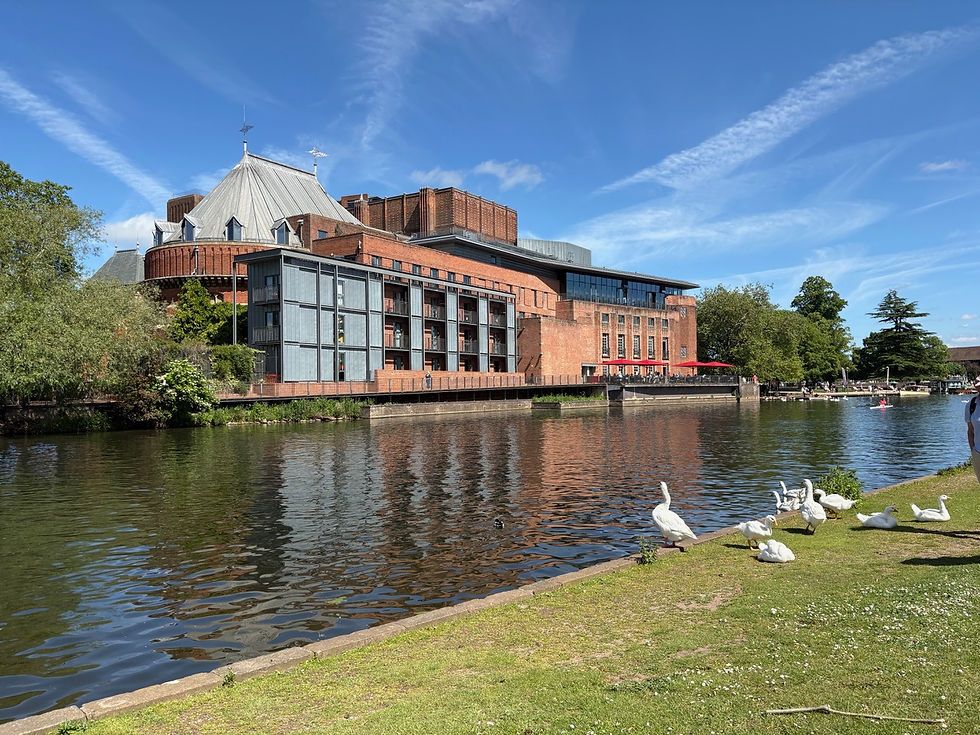
I was sixteen when I played King Lear in the school play. Wearing a stuck-on grey beard and my hair powdered white, I plunged into the role with all the dramatic conviction my teenage self could muster.
Perhaps that explains my lifelong interest in Shakespeare and why a week-long visit to Warwickshire wouldn’t have been complete without discovering a little more about the playwright’s early life and upbringing.
I stayed in Hampton Lucy, a village that once belonged to the owners of nearby Charlecote Park. Now an attractive blend of thatched, half-timbered cottages, red-brick terraces and modern homes clustered around a nineteenth century church and 200-year-old water mill, it sits amidst far-reaching acres of arable farmland. I loved the friendly hellos and smiles that greeted me on every dog walk. As a stranger, it made me feel welcome.
We don’t know if Shakespeare ever visited the village, but legend has it that he was caught poaching deer in adjacent parkland. The Lucy family have lived at Charlecote for nearly 900 years, and Sir Thomas Lucy is said to have punished young Will with a fine and possibly even a flogging. Many believe Shakespeare had the last laugh by turning Sir Thomas into the pompous Justice Shallow - a wealthy, foolish old man who appears in two of his plays and similarly keeps deer he alone can hunt.
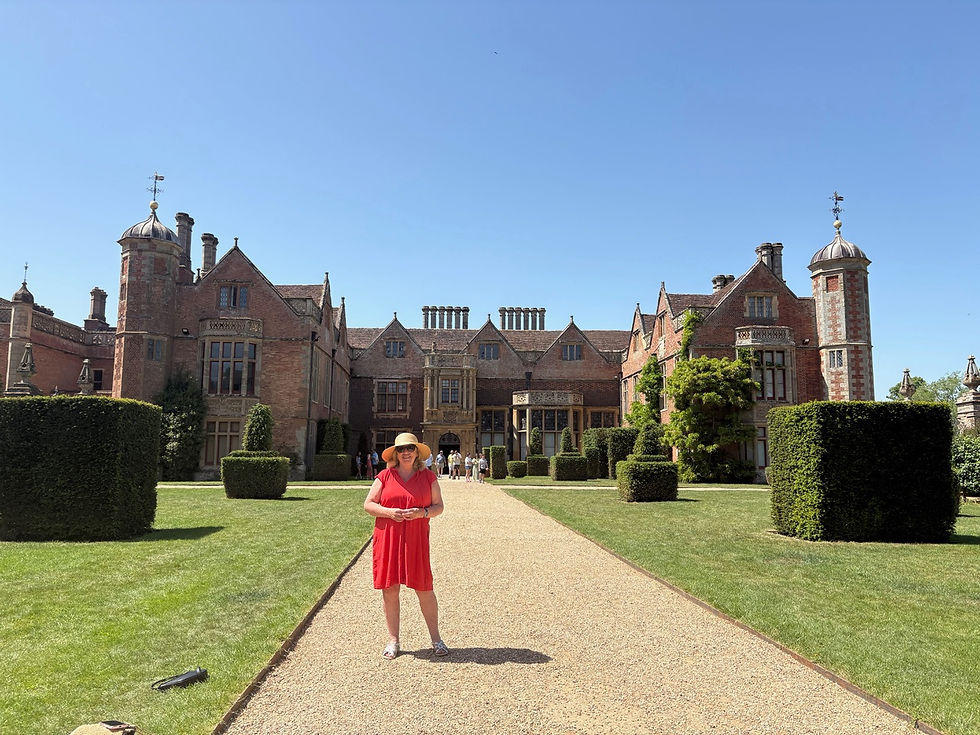
I was chuckling inwardly about that as I wandered through Charlecote’s public rooms imagining a pompous Sir Thomas welcoming Queen Elizabeth I to his newly constructed mansion. Recently knighted, he’d had the original house demolished – replacing it with a larger brick version that still bears the Queen’s crest of arms in its large entrance porch. How proud Sir Thomas must have been to proclaim that regal connection – little realising that catching a local poacher would earn him far more fame in the long run.
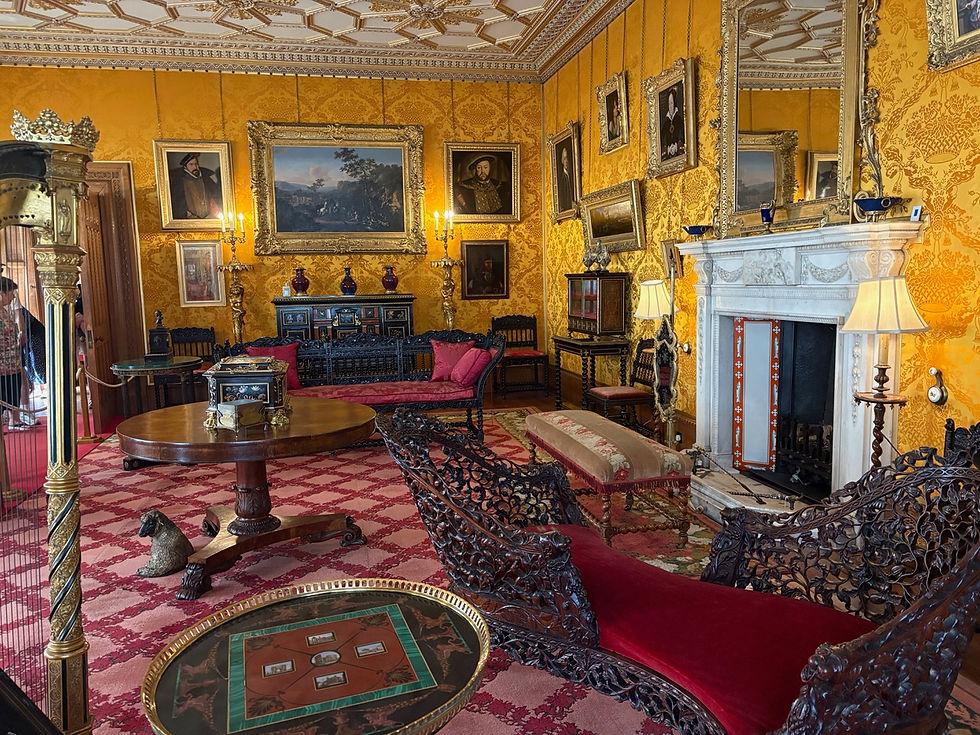
Now managed by the National Trust, Charlecote is partly occupied by the latest generation of Lucys who live in a separate wing and whose enduring presence is reflected in the many portraits, photos and objects on show.
Outside, I happily lost myself amongst Charlecote’s extensive grounds. Designed by ‘Capability’ Brown, there are meadows full of fallow deer and Jacob sheep, formal gardens and tree-lined avenues. Not quite as they would have been in Shakespeare’s day, but close enough to imagine him eyeing up his prey, getting caught, and ultimately getting his own back.
Stratford is, of course, the beating heart of the Shakespeare story. While most visitors make a beeline for his birthplace, I found myself drawn instead to the schoolroom where William learnt classical literature and language.
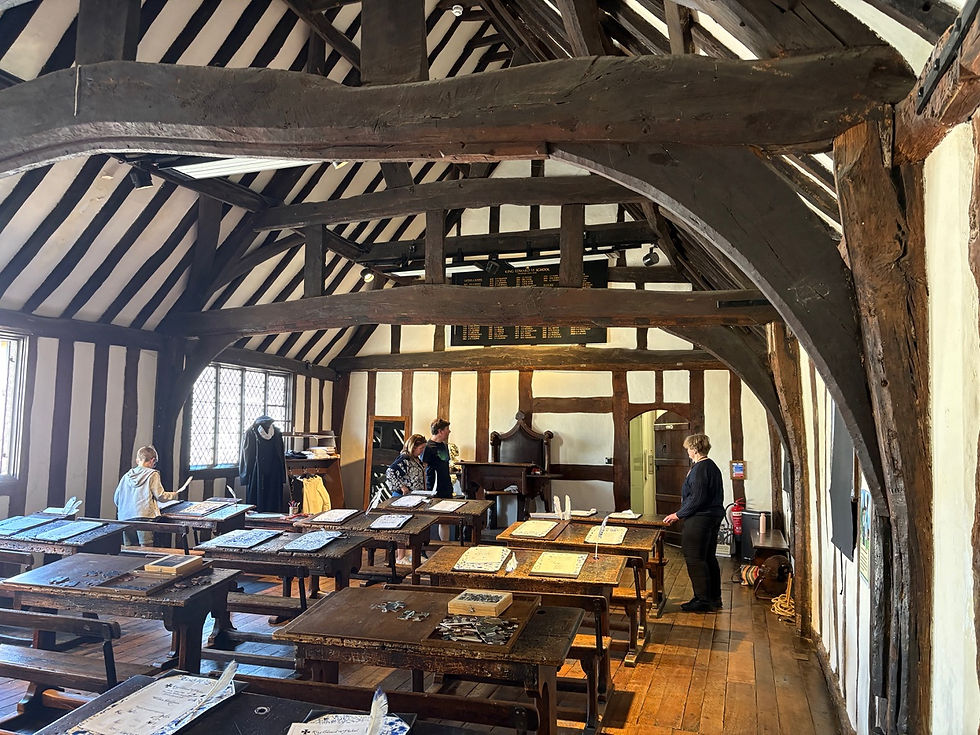
All age groups were in together and as many as sixty boys sat on forms that faced each other. Running from 6am in the summer and 7am in the winter, the school day didn’t finish until 5pm and most learning was done by rote - memorising tracts of text and reciting it aloud.
In As You Like It, Shakespeare describes the second act of a man’s life as the ‘whining schoolboy, with his satchel and shining morning face, creeping like snail unwillingly to school’. That suggests he and his classmates didn’t relish having to get up and attend class but there’s no denying the role it played in developing his nascent genius.
Sitting on one of those hard wooden benches while a schoolmaster demonstrated Tudor teaching methods made the experience surprisingly vivid. That and attempting to write with a quill pen in the Georgian classroom next door.
Shakespeare’s schoolroom is on the first floor of Stratford’s Guildhall – the heart of civic life for more than 400 years and a fascinating insight into what life must have been like when Will first started putting pen to paper.
His father, John Shakespeare, was an ambitious glovemaker who became mayor in the town when William was four. The family’s fortunes took a turn for the worst over the next ten years but, since courtroom dramas play a significant part in some of William Shakespeare’s plays, the Guildhall and its goings on clearly made an impact.
My final Shakespeare related excursion of the week was to Anne Hathaway’s cottage in Shottery – a ‘must’ after reading Maggie O’Farrell’s brilliant novel ‘Hamnet’.
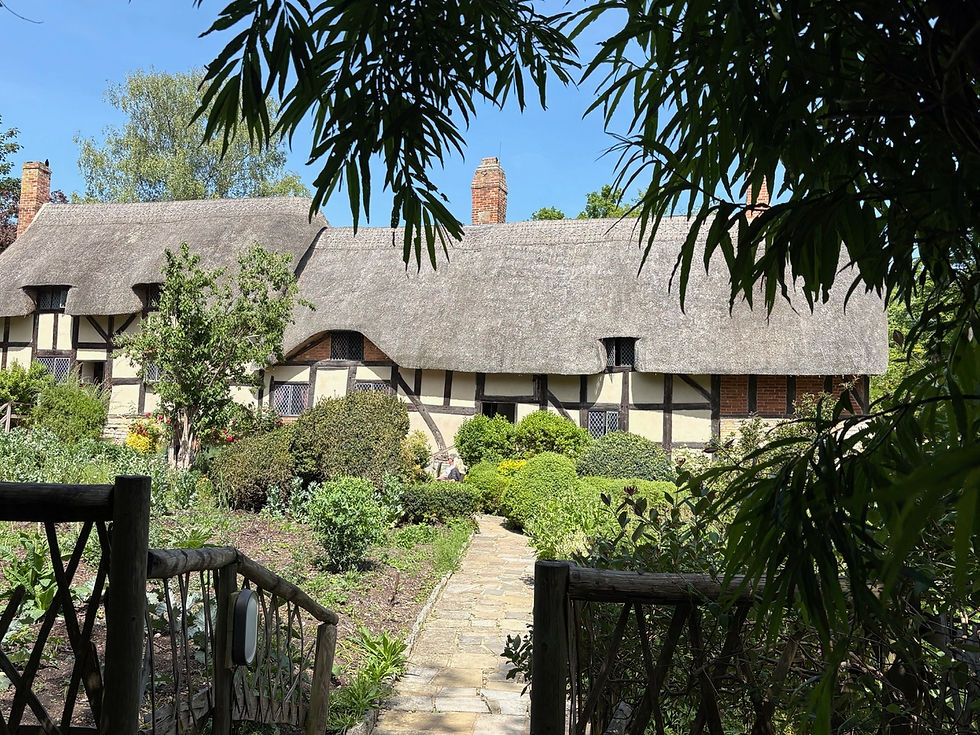
Picture-perfect in its setting, the former farmhouse has a thatched roof, beamed ceilings, narrow corridors, leaded windows and an abundance of age-old charm. There were only three rooms when Anne lived there but, as thirteen generations of the Hathaway family continued to call it home for around 500 years, an upper floor was added.
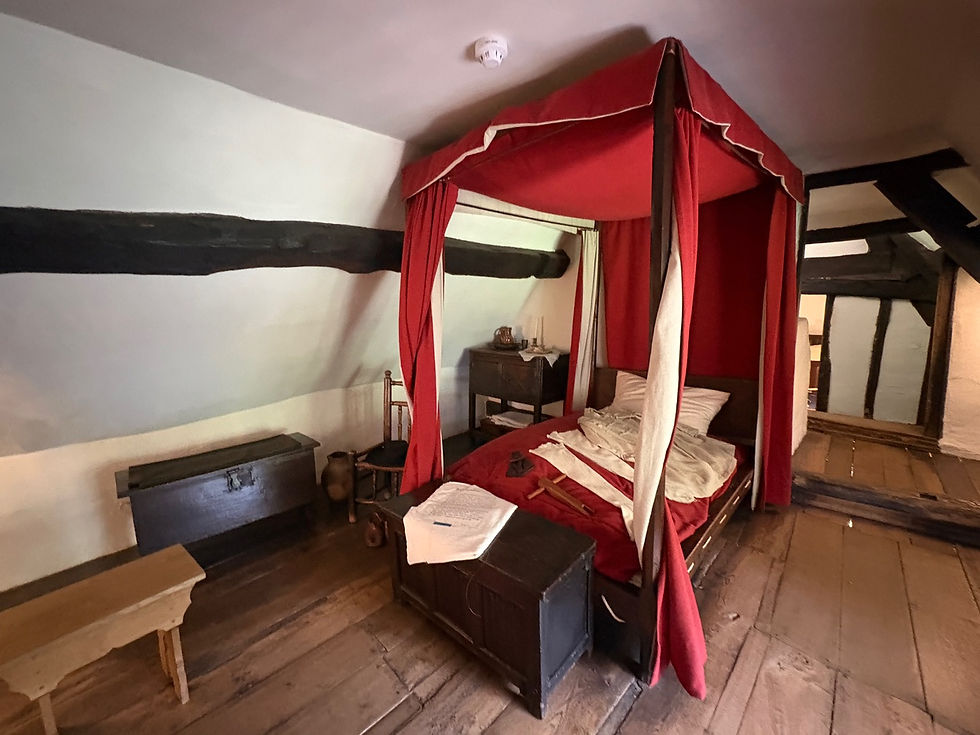
Original features include the Hathaway bed that was passed through the generations and the courting settle, a wooden fireside seat on which Shakespeare allegedly sat with Anne. A simple start in modest surroundings to a story that endures.
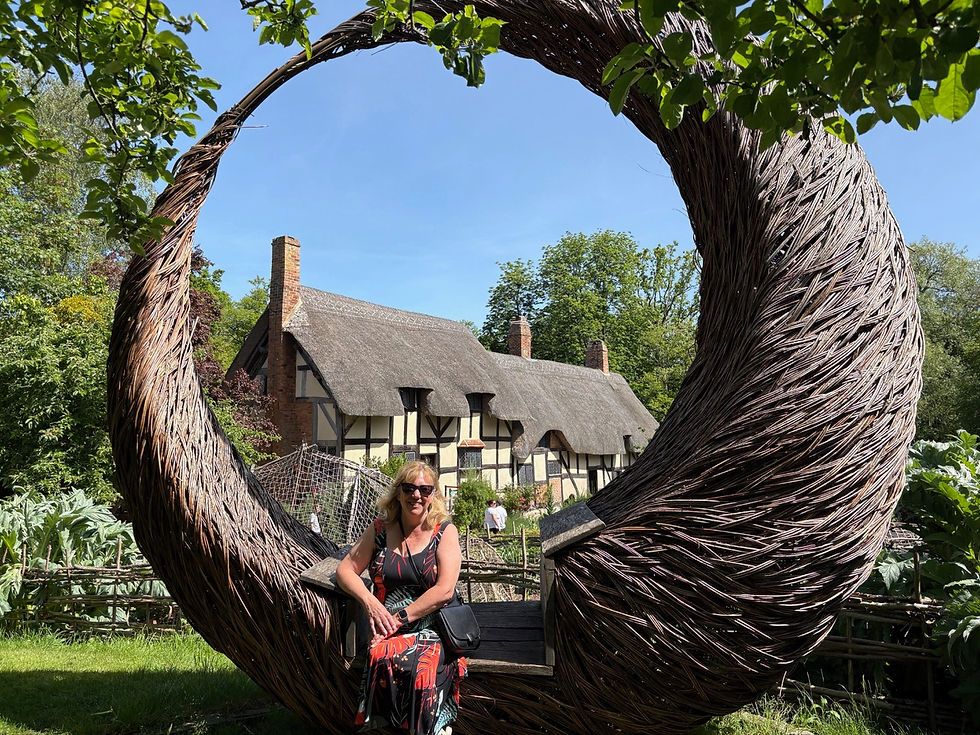
I ended my visit with a quiet amble around nine acres of cottage grounds. Once a farmyard, there are now carefully curated gardens, an orchard and sculpture trail. The weather was kind and every twist and turn revealed another chance to ponder.
Four centuries have passed since William Shakespeare last drew breath in Warwickshire, yet his presence is still very much alive in the streets, buildings and countryside he once called home.
Having set out looking for a playwright, I found the boy called Will.


