St Catherine’s Castle, Fowey

It’s not hard to see why St Catherine’s Castle at the mouth of the Fowey estuary was built. Positioned on a promontory looking out across the English Channel, it’s the perfect place to keep watch for enemy ships. At the time of its constructionin the 1530s, Henry VIII had upset Rome and the Catholic world by insisting on divorce from Queen Catherine. Invasion was a real possibility so the King ordered more coastal defences. Local landowner Thomas Treffry, whose family had become rich after supporting Henry VII during the Wars of the Roses, obliged by building St Catherine’s and, further down the coast, St Mawes Castle.
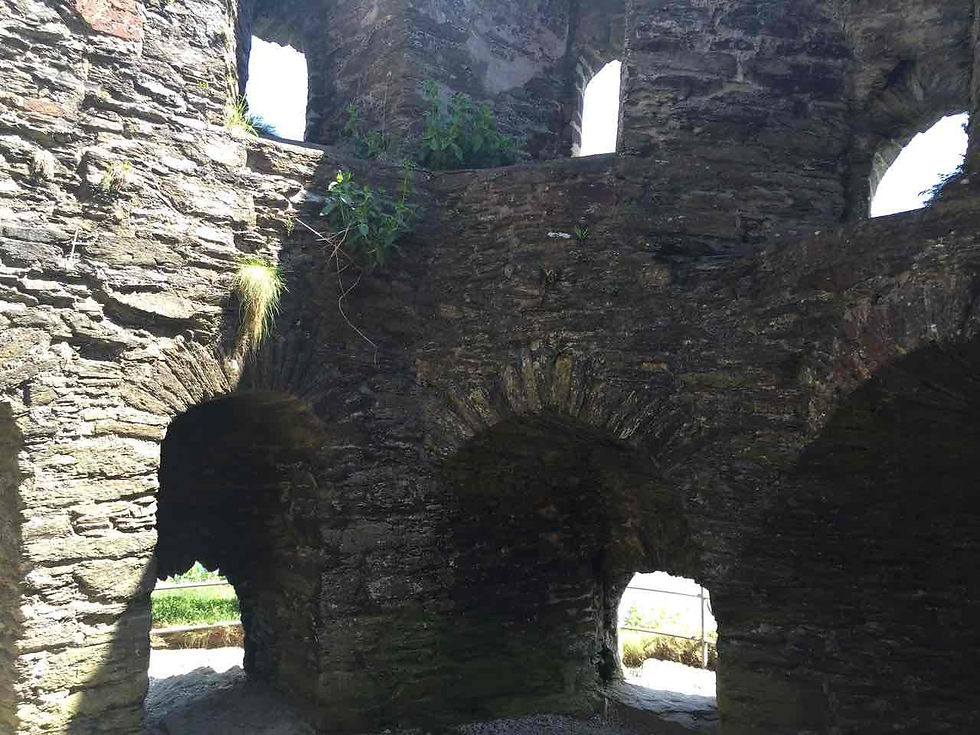
The fort was never used in anger – not in Tudor times when it came into being, not during the Crimean War when it was modified to include a battery for two guns protected by a parapet wall, nor during the Second World War when anti-aircraft guns were positioned there. Unused by the military since the end of the 1940s, the two-storey, D-shaped tower is now conserved by English Heritage. Entry is free and the views across to Polruan, down the river to Fowey and over to St Austell Bay and The Roseland Peninsula are simply breath-taking.

People started living in the area during Medieval times – attracted by Fowey’s proximity to the Channel and the ships sailing past. Piracy, smuggling and intrigue were certainly not uncommon and a kind of mob law was said to prevail. In 1457, the French attacked the town but, thanks to Dame Elizabeth Treffry who quickly rallied her men in her husband’s absence, the foreigners are said to have been repelled with molten lead poured from the top of Place House.
The Treffrys have lived in Fowey for more than 600 years and Place, with its high walls and distinctive towers, is still their private home. Thomas Treffry, the ancestor who built St Catherine’s, lived there for 54 years from 1509. Unlike his great aunt Dame Elizabeth, he didn’t have to fight invaders at his own front door but did end up spending a lot of his own money reinforcing local defences – a fact which he was keen to point out to Henry VIII’s right-hand man, Thomas Cromwell, in 1536. No reply appears to have been recorded.
Whilst the fort may have diminished Thomas’s resources, it has become a wonderful legacy. Stand beside walls that are up to 4 feet 6 inches thick and marvel at a stunning panorama which, during the summer, includes a splendid assortment of boats.
Useful info
Sat Nav: PL23 1JH
The walk from Readymoney Cove car park is about 3\4 mile
Did you know?
St Catherine’s Castle is just off The Saints’ Way – a long-distance footpath which follows the route that early Christian travellers would have taken when making their way from Ireland to Europe.
Time for tea
The Rashleigh Inn at Polkerris opens directly on to a sheltered beach not far from Menabilly, the inspiration for Daphne du Maurier’s Manderley in her most famous novel Rebecca. Snuggle up to the pub’s log fire or enjoy the terrace seating. Lovely homemade food – from sandwiches to steaks.
What else?
Readymoney Cove has a small sandy beach which faces south east. Sadly you won’t find cash growing on trees there – its name derives from the Cornish Porth Mundy, meaning mineral house cove. Daphne du Maurier rented Readymoney Cottage for a few years during the Second World War and wrote Hungry Hill there.


